Case Study
Our first client, and we gave it away
A London food-security charity, and the first organisation outside our own walls to run on the framework. We built it pro bono, because a framework that only works for the company that wrote it is not a framework.
A fast-moving charity network that could not see itself clearly.
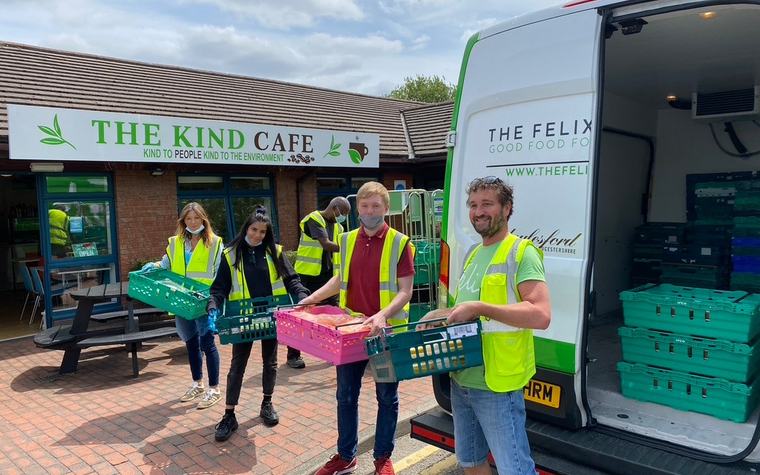
London's Community Kitchen is not one organisation. It is a family of ventures: a café, a water brand, a youth academy and a climate hub, alongside the kitchens themselves. Each has its own partners, its own programmes and its own people, and they overlap constantly.
That structure is a strength operationally and a problem informationally. Knowing which partner was involved in which programme, who decided what and on what evidence, meant asking whoever happened to remember. For a team that size, the answer usually lived in one person's head.
They did not need another dashboard. They needed a single connected model of the whole ecosystem, and a way to ask it questions in plain language.
One knowledge graph across the whole family of ventures.
Programmes, partners, people, decisions and the evidence behind them, modelled as one graph rather than a folder structure. The COP31 coalition, Project Second Chance at HMP Pentonville, Plants to Play and the LCAW programme all sit in the same model, so the connections between them are visible instead of remembered.
It runs on its own isolated database. Their data never sits beside anyone else's, and never leaves their control. For a charity holding information about beneficiaries and partners, that was a condition of the work, not a feature request.
A small team should not need a query language to ask which partners are attached to a programme, or what was decided about it and why. Answers come back with their evidence attached, pointing at the source they came from.
The work runs alongside our knowledge exchange collaboration with UCL's Department of Information Studies on transparent, graph-powered governance. What we learned building for a charity fed the research, and the research fed the build.
“The graph changed the way we see the whole operation. For the first time we can look at the entire ecosystem in one place, how our kitchens, projects and partners connect, and act on it.”
 Taz Khan MBE
We had been running our own company on this framework for a while. That proves it works for us. It does not prove it works for anyone else, and a framework that only fits the organisation that wrote it is not a framework, it is a private tool.
London's Community Kitchen was the honest test: a different sector, a different shape of organisation, a team with no time for software that needs explaining. Building it pro bono meant the work was judged on whether it was actually useful, not on whether it had been paid for.
It also meant a charity doing serious work on food security got infrastructure it could never have justified buying.
Ready to Get Started?
If a small team is carrying its knowledge in people's heads, we can map it into something the whole organisation can query. Charity or company, the problem is the same shape.